
How to Track the Most Recent YouTube Videos of the Israel and U.S. Strike on Iran
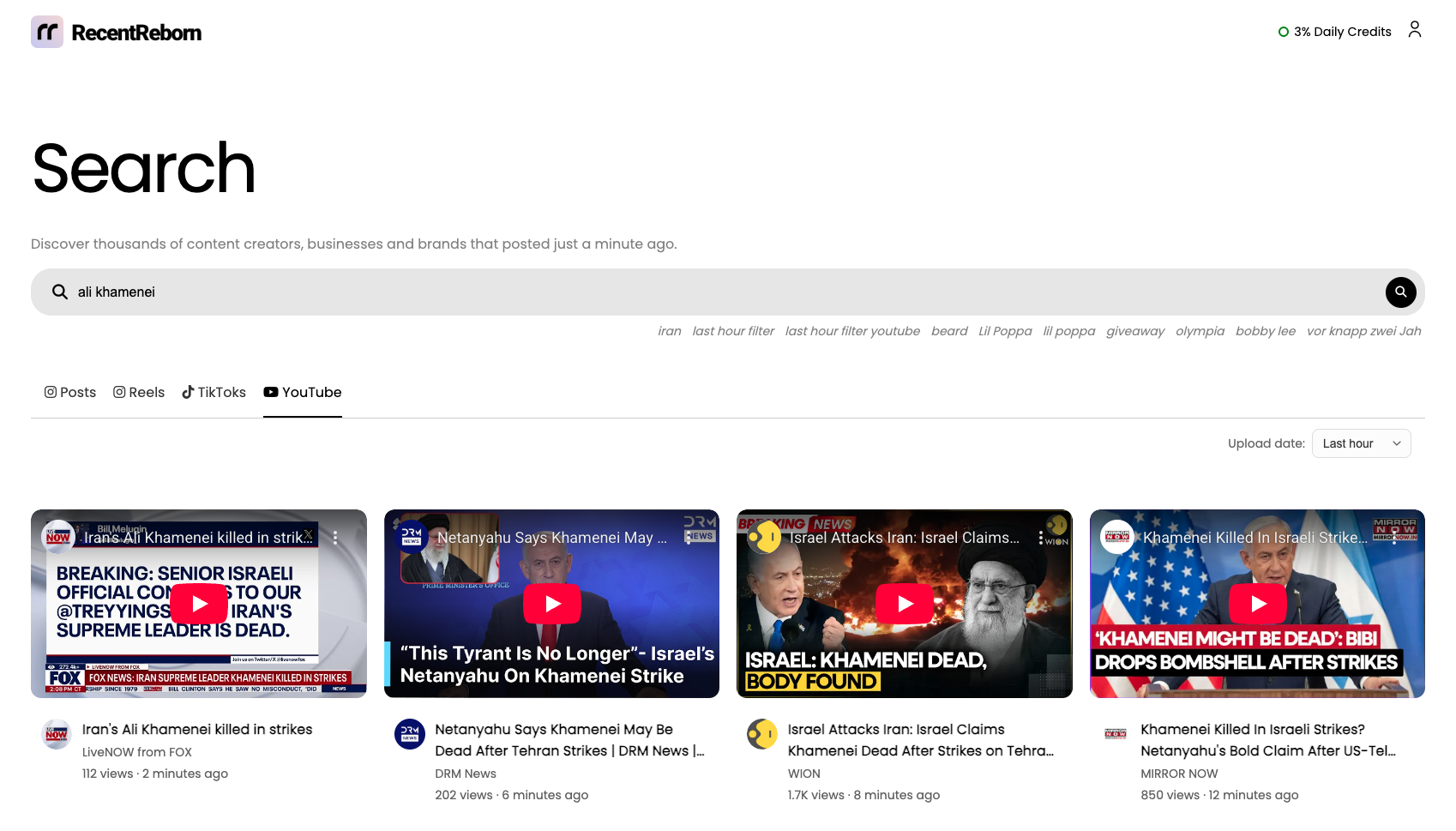
The events unfolding in Iran right now are moving faster than any newsroom can keep up with. As of today, February 28, 2026, massive military strikes have hit targets near Tehran and Isfahan. According to reports from the Council on Foreign Relations, these joint U.S.-Israeli operations began early this morning, targeting missile sites and leadership compounds (source). In a moment of crisis like this, the most accurate information doesn't come from a studio. It comes from the balconies and smartphones of people living through it.
But there is a major problem. If you open Instagram or YouTube to see what is happening this very minute, you likely won't see the person who just uploaded a video two minutes ago. You will see "Top Posts" or "Popular" videos from hours ago. To find the truth of what is happening on the ground today, you need to see the most recent, chronological updates.
Why the Algorithm Hides Today's Real Stories
Right now, an eyewitness in Tehran might be filming the sound of anti-aircraft fire. Because they are a normal person with a small following, their video doesn't have thousands of likes yet.
Instagram and YouTube algorithms often treat these vital updates as irrelevant because they aren't popular. When you search a hashtag like #Tehran or #Iran, the apps show you content that is already viral. According to PPC Land, YouTube officially removed the "Sort by Upload Date" and "Last Hour" filters in January 2026 (source). This means every search result now passes through a filter that prioritizes engagement over what is actually happening right now.
The Double Impact: Internet Blackouts and Platform Control
As we speak, reports from NetBlocks show that Iran is in the midst of a near-total internet blackout. National connectivity has plummeted to just 4% of ordinary levels as of February 28, 2026 (source). These measures are used to limit visibility into events on the ground, especially following tragic reports of civilian casualties, such as the strike on a school in southern Iran reported by The Guardian (source).
When a regular person manages to get a signal and post a video, that post is a rare window into the truth. If we only look at what the algorithm suggests, we are missing those tiny windows of communication. We are essentially letting the platforms and the government decide which stories are worth telling. This is why chronological discovery is so important. It is about your right to see the truth as it happens.
How to Restore Your Access
To get past the "Top Posts" wall and see the reality of today's strikes, you have to change your strategy. You cannot rely on the default settings of the apps on your phone. Since the official apps have removed or broken the "Recent" tab, you have to use tools that still allow you to sort by time.
On recentreborn.com, you can type in a hashtag or search and see the most recent posts, reels, TikToks and YouTube videos in the order they were posted. The platform skips the "popular" filter so you can see the real people.
Supporting the Voices on the Ground
The people taking risks to show the world what is happening in Iran right now are often beginners on social media. They are residents documenting a crisis, not professional creators. When we use tools to find recent posts, we are supporting these individuals and giving them the views they need to keep their stories alive.
Sorting by time is the only fair way to distribute information during a crisis. It gives everyone a chance to be seen. Today, seeing what was posted five minutes ago is more valuable than seeing what was popular five hours ago.

About the Author
Felix Melchner
I built RecentReborn because Instagram’s decision to hide recent posts made it impossible to find real people and small creators who are not already famous. My vision for 2026 is to restore the original soul of social media by giving everyone a fair chance to be discovered and supported through chronological search.
recentreborn.com